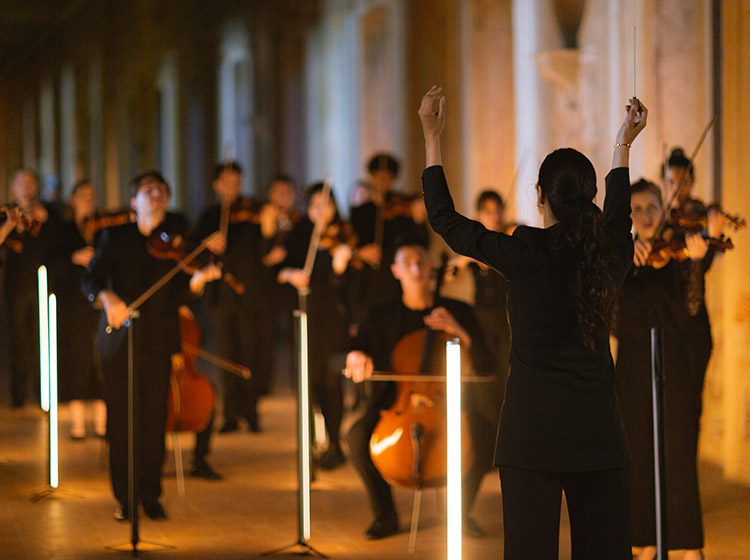
METANOIA
Programme
Bach Cello Suite No. 1 in G major – Allemande (5’)
Villa-Lobos Bachianas Brasileiras No. 4 – Prelude (8’)
Puccini Messa di Gloria (45’)
I. Kyrie
II. Gloria
III. Credo
IV. Sanctus Benedictus
V. Agnus Dei
Performers
Simone Menezes conductor
Oliver Johnston tenor
Ashley Riches bass-baritone
Kacper Nowak cello
K ensemble
London Voices choir
Ben Parry choir conductor
At first sight, in the programme chosen by Simone Menezes, there does not seem to be a natural connection between pieces, written across different centuries and different countries. Yet they compose a suite, and a human narrative.
Bach has influenced all European composers since, and we find his harmonies and polyphonies in Russian music, French music, with Villa-Lobos or with Puccini. A journey through time but in continuity. Bach’s Partitas and Sonatas explore the human soul and emotions through life. Searching for elevation and serenity.
Bachianas Brasileiras do the same, with the specific sense of melody, flow and rhythm which characterise Villa-Lobos.
And finally, Puccini’s Messa di Gloria is the most transcendental of all his work, though he is much better known for his bel canto opera. His operas are often tragic, but this great piece offers elevation and salvation. Starting with a violin piercing, reaching our heart through our vibrating skin and bones, the orchestra and choir carry us to a better version of ourselves.
Cyrille Vigneron
The word “metanoia” fascinates me.
In Ancient Greek, “metanoia” signified setting oneself a change in behaviour, supposedly better, a new vision, new direction. The word “metanoia” is also widely used in the New Testament, signifying beyond ourselves, beyond reason, and relating to a kind of U-turn whereby man opens himself to something greater than himself, within himself.
Certain composers have the power to communicate straight to our hearts things that are inexpressible, that go beyond reason, that speak of the spiritual, of emotions of transcendence.
Our concert is introduced by the Allemande from the Cello Suite No. 1 in G major by Johann Sebastian Bach. Bach’s music, the greatest expression of “metanoia” in music, crosses time and space and arrives 200 years later in Latin America where he meets Heitor Villa-Lobos, inspiring him to compose the Prelude from Bachianas Brasileiras No. 4 for string orchestra. Villa-Lobos said, “Bach was a missionary, he came from above with the mission of introducing music all over the world, and his music is in the air, in nature, available to anyone who wants it.”
In this Prelude, inspired by the theme of the Musical Offering, Villa-Lobos takes the Bachian theme and adapts it, transforming it into a piece of powerful intensity, a collective nostalgia, an existential malaise overcome by a voracious appetite for life. Villa-Lobos said that our ultimate mission should be to make the whole world sing. This piece is a collective lament, a Kyrie sung by the strings.
Then, the strings passed the baton to Puccini, now, a real Kyrie is presented to introduce the Messa di Gloria by Giacomo Puccini. The Messa di Gloria is the only piece of religious music that Puccini composed. From a family of church musicians, in the opposite way of Bach, he was convinced that the Almighty Lord once told him that he should compose only for the theatre and no longer for the church. In this Mass, we find the seeds of Puccini’s touching lyricism that is later found in his operas, his spirituality full of powerful, contrasting emotions.
Bach, Villa-Lobos, Puccini – looking at this repertory with our intellect, we can find this programme as strange as combining goat cheese and honey. However, if we go beyond our intellect (“metanoia”) we can discover the sophisticated and tasteful connection that inspires these composers and links each of these works.
Simone Menezes
If you are no longer able to attend, please let us know either online via our Contact Us form or by phone on 020 7730 4500.
Duration: to be confirmed – we will update this page as soon as we have running times. Please do not call the Box Office as they do not have any further information than that currently on our website. Most events last 2 – 2½ hours, evening events generally finishing no later than 10pm Monday to Saturday and 9pm on Sundays.
Photo credit: Patrick Wack
Ticket Information
This event has passed.
Related Events
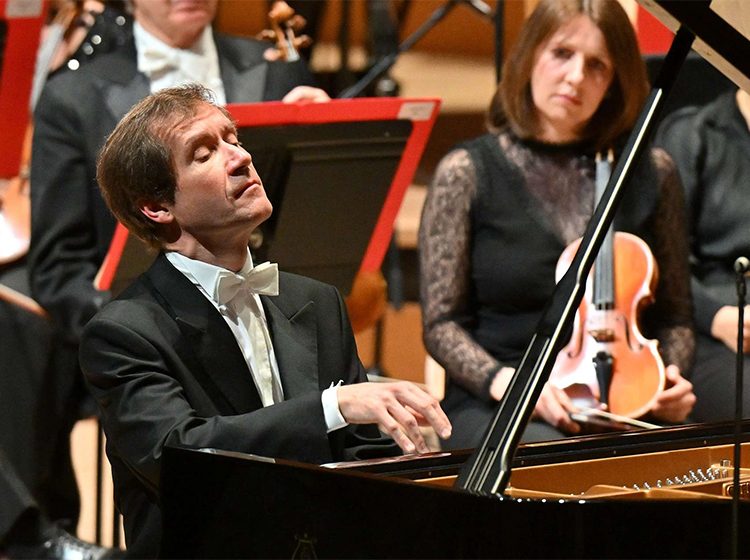
NDR Radio Philharmonic, Hanover
with Nikolai Lugansky, piano
Thursday 15 October 2026, 7.30pm
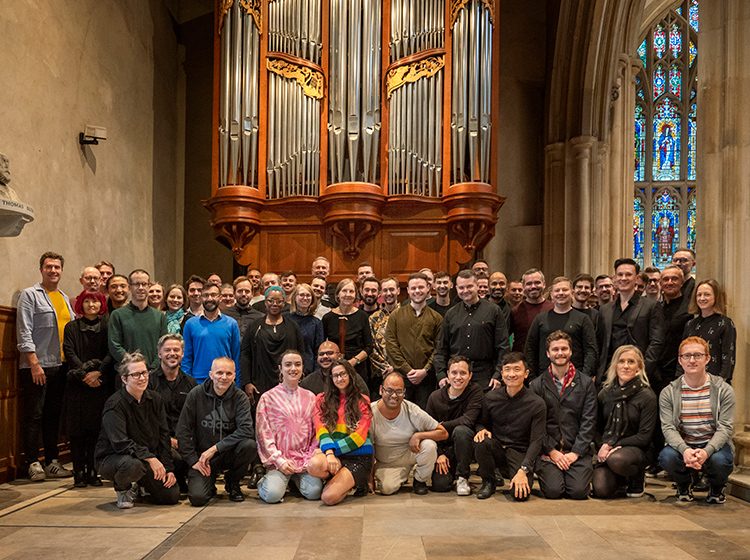
London Gay Symphony Orchestra
30th Anniversary Concert
Sunday 18 October 2026, 6.30pm
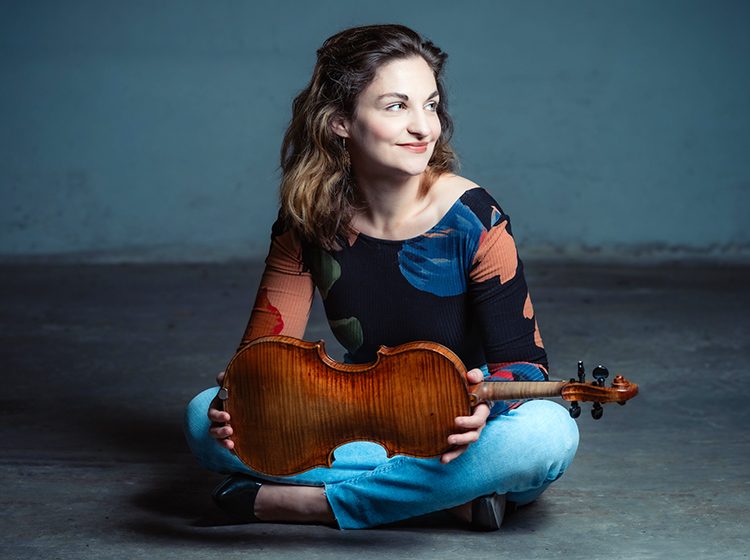
Flanders Symphony Orchestra
with Alexandra Soumm, violin
Tuesday 3 November 2026, 7.30pm
National Symphony Orchestra
Variations and Virtuosity
Sunday 8 November 2026, 6pm
Join our Mailing List
Join our mailing list to be the first to hear about new events and for access to pre-sale tickets.